Dreams: "The Caracal Guide"
Dream recorded on Jan. 8, 2026
I was riding in a Jeep with a large group of people when we arrived at the safari lodge. We had just completed a tour of a big cat sanctuary where we observed cheetahs, pumas, and other wild cats from the safety of our vehicle—the conclusion to an earlier dream I can no longer recall.
The guide pulled our Jeep behind the lodge and we slowly climbed out. One by one, we made our way inside, leaving the dark, dense rainforest behind us.
As we trickled in, I found our tour guide waiting behind a podium, and my group (who I understood to be my family) assembling to listen to him speak.
He began giving a lecture to conclude our experience, but as time went on, I grew impatient. I had been sitting on a question I was dying to ask.
As he continued to drone on, I took in the scene around me. The lodge was warm, dry, and beams of sunlight spilled through the windows. It was noticeably modest, too. It had wood-paneled walls, rough wooden floors, and a few chairs, plaques, and dioramas. The lobby was a simple, comfortable reception area for safari guests like ourselves, though I sensed the rangers had their own quarters somewhere else in the facility.
After what felt like forever, the tour guide abruptly ended his lecture. But by the time I turned around, he was already exiting through a door behind him.
With this, our tour was complete, and the once-attentive group lost cohesion. Some turned to chat about where we might stop for lunch, while others drifted off to inspect the plaques and dioramas.
Meanwhile, I remained where I stood. I was feeling disappointed that I hadn't been able to ask my question—until, from the corner of my eye, I spotted a man down the hall.
The man was in a different lobby at the far end of the lodge. When I looked closer, I was able to make out that he was wearing the same uniform as our guide from earlier. Bingo.
I glanced back at my group to find them still drifting, then back at the man again. After deliberating for a moment, I decided to take the opportunity to ask him my question and quietly slipped away.
I began making my way to the other end of the lodge, passing through a long hall with a dozen doors lining it. And as I got closer, I was able to make out more of the man’s features: he was tall, slender, and sweeping the floor with headphones cupped to his ears.
Approaching the end of the hallway, I could now see that this lobby mirrored the reception area I just came from, although it was a little different. It was noticeably cleaner, brighter, and more peaceful. A smaller, more intimate space, too.
The guide watched as I approached, and welcomed me over with an inviting smile before removing his headphones. I could sense he was introverted, so I was relieved that he was receptive to a conversation.
“Hello,” I said shyly.
“Hi there," the man said. He was smiling as if he already knew me.
“Sorry to bother you,” I began, “but we were just talking about the big cats we saw earlier today. I have a question about them that I’ve been dying to ask.”
The man set his headphones on a windowsill and leaned against the wall, resting the broom beside him. He looked back at me, his smile inviting me to continue.
“What do I do if I encounter a big cat alone in the wild?” I asked eagerly.
“Ah,” the man said, his smile widening. He seemed excited to share his knowledge with someone willing to ask.
“Well,” he continued, “you want to be loud—and present.” He straightened his posture to demonstrate. “Speak loudly. And carry a big stick, if you have one.”
The guide picked up his broom and gripped it like a walking stick.
“Make noise—though you do not want to come across as threatening.”
He suddenly whacked the broom hard against the wall, and the loud smack made me jump. He had my attention!
“You just want to let the cat know you are there," he continued, “but never show any fear, even if—”
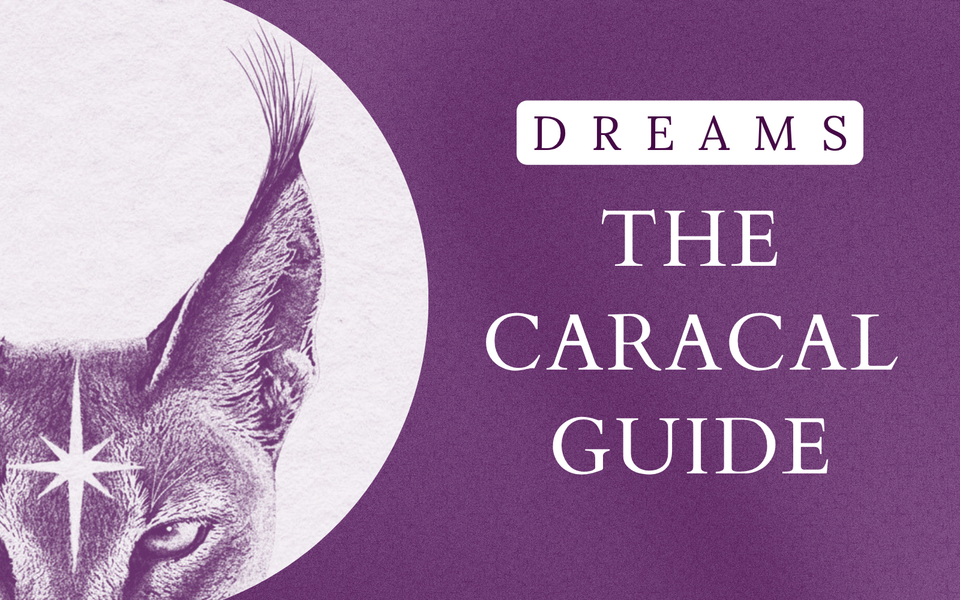
The room suddenly darkened, and I watched as the guide in front of me transformed into a large, terrifying caracal, with pointed ears and sharp predatory eyes.
“—they look at you like this—”
The caracal guide leaned his face in until it was an inch away from mine, forcing me to stare deep into the dark and unending abyss of his eyes.
“—or if they—”
He then threw his head back and released a harrowing, piercing wail—the most horrifying sound I’ve ever heard in my life.
Suddenly, he stopped and looked at me with his face still close to mine. The sound shook me to my core. I stood there trembling, holding his gaze.
He studied me for a long moment before returning to his human form. As he did, the darkness faded and the lodge reappeared around us.
“Do not show fear,” he reiterated, “and they’ll leave you alone.”
The guide cupped his headphones back over his ears and continued sweeping as before—still smiling.
I stood there stunned. The sound he made horrified me, and I could still hear it echo in my ears.
I've heard that sound before, I thought. But where?
★ ★ ★
I shot right up in bed after having that thought, breathing heavily.
Where have I heard that sound?
Interpreting "The Caracal Guide"
On the surface, the guide appears to be a malicious character. He's certainly spooky, and I felt unnerved the next morning. But while that was my initial impression, it wasn't until much later that the meaning behind the dream became clear—as did my understanding of the guide.
To make sense of the dream and how I came to later understand it, it helps to first learn a bit about the psychology behind our dreams.
The Conscious and Unconscious Mind
In Jungian psychology, the whole of our mind can be broken up into roughly two parts: the conscious and the unconscious.
The conscious part of our psyche contains all of the things we are actively aware of in the present moment: our thoughts, emotions, sensations, and recent memories.
Meanwhile, our unconscious holds all of the contents that we are not actively aware of. This includes forgotten memories, familiar faces you can't place, or subtle impressions others have on our personality.
While these unconscious contents exist somewhere outside of our immediate awareness, that doesn't mean they simply disappear. Instead, they still exist in the backburner of our minds and exert influence on us. You can think of it like a kind of "psychological blind spot" we have.
Consider a time where you encountered a strong scent and it elicited a nostalgic emotion from childhood. Or maybe a song you heard unearthed a memory that you hadn't thought about in many years. That feeling or memory was there all along, even if your conscious self couldn't recall it on demand.
But the unconscious also contains aspects of ourselves that we ignore or suppress. Things like painful memories, traumatic experiences, inconvenient thoughts, or hidden fears and desires. And because these parts of ourselves are neglected, they generate a great deal of inner-conflict that manifests as fears, guilt, or behavior that is at odds with who we really are.
The Role of Dreams
So it is in our dreams where what has been ignored or unseen in the unconscious is brought to our attention.
If we listen well and reflect on our dreams, their meanings often become clearer in time. You may be able to recall a dream where, upon waking up the next morning, a particular image, person, or emotion stuck with you. Later on, you may have discovered that it reflected something you were avoiding or unaware of at the time.
However, the psyche can only meet us half way; once we understand what a dream might be informing us of, conscious action is needed to reconcile these neglected parts of ourselves. This might require that we face certain fears, revisit traumatic memories, or admit painful truths about ourselves or those we love.
Archetypes
Dreams are one way the psyche communicates what is unconscious to us, but rarely are they direct about what it is trying to tell us.
This can be very frustrating, but it does make sense: by definition, what is unconscious, exists outside our awareness. So to communicate with us, the psyche uses symbolism—animals, colors, locations, and characters.
You can think of dreams as the mind speaking in metaphors and symbols, much like a book. And, much like understanding books, it takes an almost literary perspective to better understand their meaning.
In psychology, these symbols are called archetypes.
Archetypes in "The Caracal Guide"
One archetype, or symbol, in the dream was my guide—literally a safari guide and, figuratively, a psychological one.
Jung referred to this specific type of guide as the psychopomp. Much like the Hermes in Greek mythology, a psychopomp who guided souls to the underworld, the psychopomp is an animal or character who guides dreamers toward something hidden in the unconscious—and in my dream, that is exactly what my guide did.
The other archetype was the caracal itself. Cats in our dreams usually represent intuition, instinct, and independence. But the specific cat matters too; unlike a housecat, the caracal is wild, alert, and predatory.
"The Caracal Guide"
Dreams can be understood as a bridge between our unconscious and conscious. And to reveal what is hidden from us, the psyche uses symbolism as a way to bring unconscious contents into our awareness.
At the time of this dream, I was facing a potential move, career change, and all the logistical awfulness that goes along with it. If I had shown hesitation where confidence was needed, things could've turned out poorly.
The Caracal Guide may have appeared threatening, sure. But he was trying to make me aware that, in the face of danger, showing fear is an invitation to ruin and predation.
Related Archetypes
Below are related archetypes. Maybe you can recall a dream in which one of them appeared.
Great Cats
Great cats (lions, cheetahs, etc.) often represent intuition and instinct of the psyche—aggression, independence, and autonomy. Their predatory attitude or reserve also mirrors reflects instincts we find difficult to control or express; a threatening wild cat may suggest that instinct or intuition is struggling to be expressed, or that it has too much influence and needs to be contained. Meanwhile, a calm or guiding cat may represent a healthier relationship with one’s intuitive nature.
Shape-Shifting
Shape-shifting may present itself as a person changing forms, into an animal, another person, or even an object. In dreams, it may reflect adaptability and hidden potential, but also instability, deception, or uncertainty about someone or something’s true nature.Shape-shifting is usually temporary and fluid.
The Shadow
Our “shadow” often appears as a threatening stranger, enemy, monster, or dark version of ourselves. It embodies our repressed fears, desires, or other traits (both positive and negative) that we prefer not to acknowledge. Even when hidden, these parts still affect us; their presence in our dreams is the psyche’s way of bringing them to our attention for reconciliation.
A House
A house typically represents the self or structure of the psyche; the different rooms, floors, or hidden spaces as different parts of you. A basement, for example, may suggest something within you that has yet to be explored, while a childhood bedroom may reflect something that has remained unprocessed, frozen in time.
A Descent into Darkness
In dreams, you may descend into a basement, down a road, cave, or some other dark place. Once descended, you are often confronted by a person, creature, or situation. The decent usually symbolizes us moving deeper into the unconscious, while the thing we confront often mirrors our hidden fears, emotions, memories, or parts we may have rejected. If successful, the confrontation ends with a realization, transformation, or feeling changed in some way.
"The Caracal Guide" is one among many dreams that I've journaled over the past few years. Over this time, I’ve found dream journaling to help me better recognize the emotions, concerns, or unintegrated parts of myself that I was not always aware of.
Interpreting dreams can be difficult at times and easy to dismiss as mystical or “woo-woo.” But informed by sleep science and psychology, dream interpretation can be more grounded than it first appears. So, if this topic interests you, I hope you stick around for more.

If this writing adds value to you, consider helping it grow.