Book Review: "Lions and Scavengers"
Book Brief
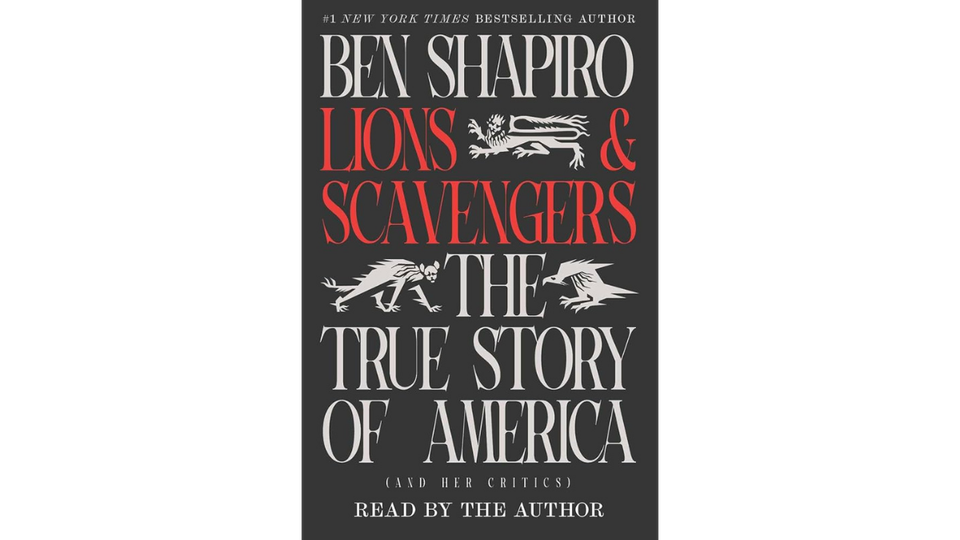
In Lions and Scavengers, Ben Shapiro argues that the West’s political and cultural divide reflects a deeper struggle between the “Lions” who sustain civilization, and the “Scavengers” who seek to tear it down—a struggle at the center of every human heart.
- Author: Ben Shapiro
- Published: 2025
- Genre: Political Science
- Page Count: 256
- Personal Taste: ⭐ 3.5/5
- Craft: 📐 7/10
- Bandwidth:🔵 4/10
✅ Recommended for: Conservatives or political moderates interested in a compelling right-of-center take on the West’s culture war.
❌ Skip if you: Are a “Scavenger,” dislike Shapiro’s firebrand rhetoric, or may find his Christian-Conservative perspective a dealbreaker.
The Book
Context: Ben Shapiro has built his career as a conservative political commentator, author, and founder of The Daily Wire. In interviews about his newest books, Shapiro often describes beginning with an idea he wants to advance, then developing it through the writing process.
The inception of Lions and Scavengers, however, emerged from an emotionally fraught trip he took to Oxford University, England, in November of 2023. Shapiro had been invited to speak with students, but with the event scheduled weeks after the Hamas terrorist attacks on Israel, he was notified by his team of the security risks he faced as a Jewish conservative. Shapiro still decided to speak and encountered intense hostility toward Israel and the West. Struck by his reception, he began an essay that ultimately developed into Lions and Scavengers.
Contents: Lions and Scavengers explores the political divide in Western Civilization through two enduring archetypes. In Shapiro’s framework, the “Lion” builds and protects civilization, while the “Scavenger,” driven by resentment and envy, seeks to destroy it. Authored in response to the political and cultural conflicts of 2023, the book draws heavily on contemporary events in addition to historical anecdotes and Christian-Conservative philosophy.
The book has eight chapters, with the first three developing the idea of the "Lion."
- "The Way of the Lion" (defines the Lion)
- "The Pride" (examines the different types of Lions)
- "The Rules of the Pride" (outlines their moral code)
Chapters 4-6 mirror this structure from the perspective of the "Scavenger":
- "The Way of the Scavenger"
- "The Pack"
- "The Rules of the Pack"
With the archetypes established in the first six chapters, the final two bring their struggle to the forefront and call upon readers to defend Western civilization.
"Should I Read This?"
On one hand:
- Shapiro lays out his points clearly and methodically, making the 256-page book breezy and digestible.
- The book’s structure creates a strong balance and contrast between the archetypes; the mirroring of chapters 1–3 and 4–6 sets up the final two chapters’ broader argument about Western civilization.
- Those who can look beyond Shapiro's rhetoric—and are open to considering his Christian-Conservative framework—will find a clever, reasonable, and original perspective.
On the other hand:
- While the archetypes of "Lion" and "Scavenger" are compelling, they are also too binary for nuance to exist.
- Shapiro also fails to steelman the “Scavenger.” A fairer representation of the Scavenger’s grievances and motivations would have strengthened his argument.
- Shapiro’s delivery remains a serious barrier to entry for those who are not already receptive to his rhetoric. Most notably:
- Unnecessary boasting and jabs at his ideological rivals.
- Frequent appeals to Judeo-Christian tradition.
- Repurposed arguments from his show that are immediately recognizable.
- This delivery alienates both new and existing readers, raising the question of who the book is even for.
- The book’s scope is way too time-bound; less than a year after its publication, parts of it already feel tied to a moment that has since passed.
Judgment
Lions and Scavengers captures a real undercurrent of the West's culture war and makes a compelling case about the archetypes that underpin it. But while Shapiro's arguments are both perceptive and original, his delivery creates unnecessary friction for both a broader audience and those already familiar with his work.
It's not a bad book. But ultimately, it failed to capitalize on the larger potential: a broad, thematic look at the enduring conflict between Lion and Scavenger across American History. Had Shapiro done that, he might have created a stronger and more timeless work.
Missed A Larger Potential.