Book Review: "The 48 Laws of Power"
Book Brief
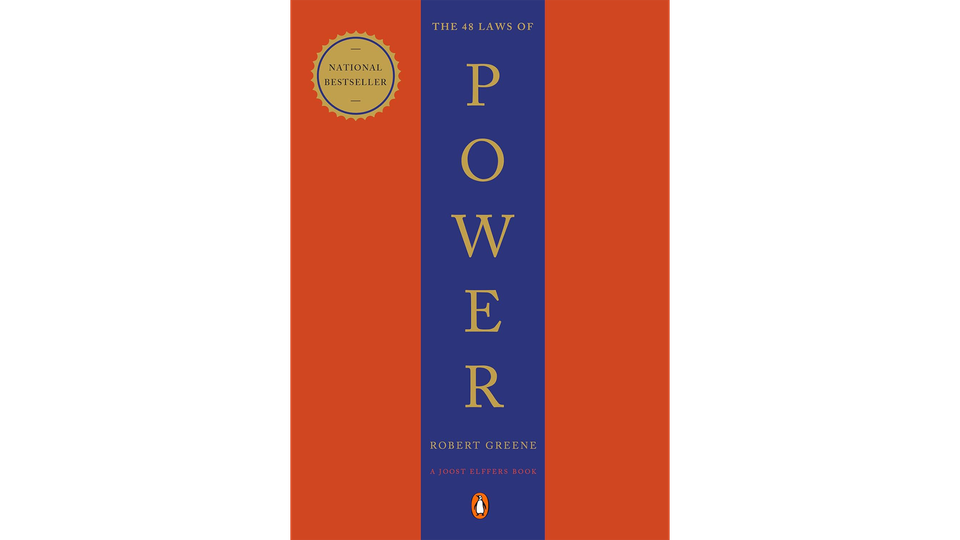
The 48 Laws of Power is not a manual on evil, but a descriptive catalogue of how power is gained, maintained, and lost. The author draws from history to illustrate his points while withholding moral judgment so the mechanics remain clear to the reader.
- Author: Robert Greene
- Published: 1998
- Genre: Self-help; Political science
- Page Count: 452
- Personal Taste: ⭐ 4.5 / 5
- Craft: 📐 7.5 / 10
- Bandwidth:🟡 5 /10
✅ Recommended for: political strategists, history buffs, business leaders, and independent personalities.
❌ Skip if you: prefer idealistic politics or find detached analysis distasteful.
The Book
Context: In the early 1990s, Robert Greene was adrift as a writer in Hollywood. He was now into his 30s and had already cycled through dozens of dead-end jobs. This was largely due to friction between his personality and workplace politics—and nowhere was this more apparent than in Hollywood. Greene became disillusioned with power games and left for Europe to continue writing despite an uncertain future. He had finally caught a break in 1995 while writing in Italy when he met Joost Elffers, a publisher who asked him about potential book ideas. In a single moment, years of observation and frustration crystallized: Greene pitched a book that would articulate the power games he had spent years watching—The 48 Laws of Power.
Contents: The 48 Laws of Power is a collection of practices that show how power is gained, maintained, or lost—brought to life with historical stories. The book is not broken up by traditional chapters, but organized into standalone, modular “laws.” Because of this, the book can be read in any order. Each law is presented in a similar format:
- The Law: the premise of the chapter (ex: "Law 1: Never Outshine the Master")
- Judgment: brief introduction and framing of the law.
- Observance/Transgression: historical anecdotes illustrating the consequences of adherence or violation of the law.
- Interpretation: Greene's analysis of what each example reveals.
- Keys to Power: specific takeaways and practical implications.
- Reversal: when this law does not apply.
"Should I Read This?"
On one hand:
- Greene’s opening tone is dramatic and performative, creating an unnecessary risk where readers might not take him seriously.
- The core arguments are bolstered by effectual truths—powerful as evidence, yet likely to strike a sensitive audience as distasteful or taboo.
- At times, the language is repetitive, and the author double-dips on many of the same stories. This makes the book feel longer than it is and difficult to read linearly.
- Greene offers the reader strong principles, but their practical applications are left to the reader.
On the other hand:
- This book is an unadulterated catalogue of power that is not only unusual within literature, but distinctive to him as a writer.
- By avoiding moral commentary, Greene prevents readers from confusing moral aspiration with reality—offering a clear, uneditorialized view of how power actually works.
- And in avoiding this moral commentary, the author treats the reader as an equal capable of judgment rather than an idiot in need of guidance.
- The analysis and dissection of power remains useful whether read as a playbook, a catalogue, or an exposé.
- Greene articulates subtle power dynamics so plainly that they feel obvious at first, only later revealing that they weren’t.
- Despite some repeated stories, they remain compelling and relatable—and the repetition helps make them more memorable.
- While a slog to read linearly, its modular structure makes it easy to access and reference later.
- Beyond analysis, the book offers real insights that translate directly into navigating competitive institutions—whether that means defending reputation, managing alliances, or avoiding predictable power traps.
Judgment
The 48 Laws of Power captures and distills timeless, effectual truths about power—and there is little else like it. Read out of context, Greene can come off abrasive and off-putting. But read in full or heard in interviews, it becomes clear that his posture is purely analytical over malicious. The book has enjoyed massive success despite its abrasive tone and refusal to soften its subject. While Greene does not succeed in making the subject comfortable or widely palatable, that friction is precisely what gives readers an edge.
An Instant Favorite